
Why Your Final Piece Is Never Exactly the Same Size as Your Wax Model
If you've ever received a cast piece and noticed it's slightly smaller than your original design, you haven't made a mistake — you've just encountered one of the most fundamental realities of jewelry manufacturing: casting shrinkage. Understanding this phenomenon is essential for any jewelry designer, independent brand, or retailer working with a manufacturing partner to bring their vision to life with precision.
What Is Casting Shrinkage?
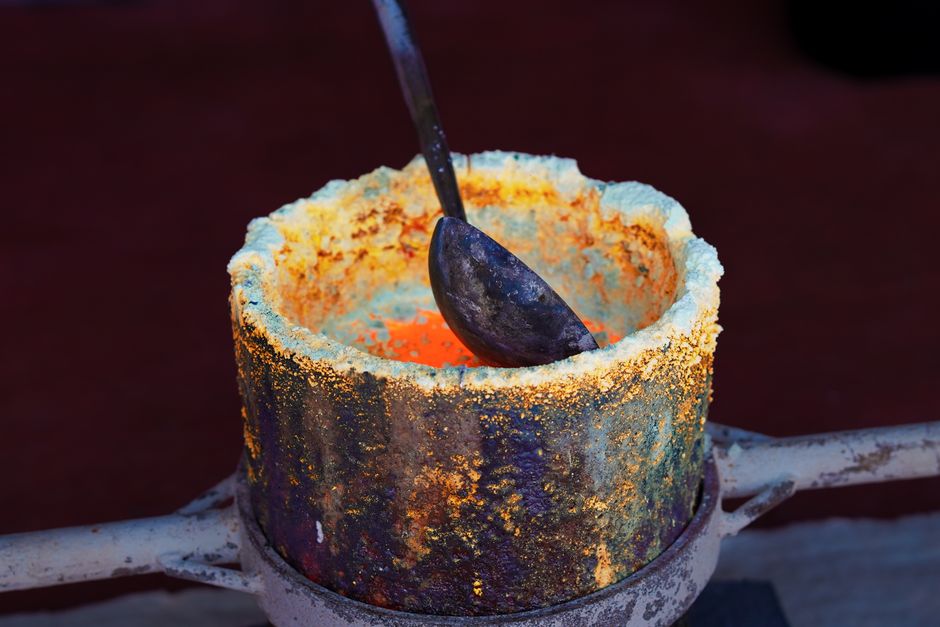
Casting shrinkage refers to the dimensional reduction that occurs when molten metal cools and solidifies inside a mold. When metal transitions from a liquid state at extremely high temperatures to a solid at room temperature, the atoms pack more tightly together — causing the metal to contract in volume. This isn't a flaw; it's simply physics.
In practical terms, the shrinkage rate varies depending on the metal alloy being cast. Here are typical shrinkage percentages seen in jewelry manufacturing:
- Sterling Silver (925): approximately 4–5% linear shrinkage
- 18K Yellow Gold: approximately 3–4% linear shrinkage
- 14K White Gold: approximately 3.5–4.5% linear shrinkage
- Brass and Bronze alloys: approximately 4–6% linear shrinkage
These percentages may seem small, but on a delicate ring band or a precisely measured bezel setting, even a 1mm difference can mean a ring that doesn't fit or a stone that won't seat correctly.
How CAD Design Compensates for Shrinkage
This is where professional CAD jewelry design becomes invaluable. Experienced jewelry CAD designers don't model pieces at the exact finished size — they apply a shrinkage compensation factor during the design phase. This means the CAD file, and subsequently the 3D printed wax or resin model, is built slightly larger than the intended final dimensions.
"Getting shrinkage compensation right from the start eliminates costly rework and ensures your first cast piece fits your specifications precisely — saving both time and material costs."
At JewelCAD Design Ltd, our Bangkok-based team applies alloy-specific compensation factors to every design we produce. Whether you're ordering a single prototype or preparing for a production run, this precision at the digital design stage translates directly into quality at the casting bench.
The Role of 3D Printing in Managing Shrinkage
Modern jewelry manufacturing using 3D printed wax or castable resin models has actually made shrinkage compensation more accurate and repeatable than ever before. Unlike hand-carved wax models — where compensation relied entirely on the craftsman's experience — digital files allow for mathematically precise scaling before printing.
However, it's important to note that 3D printed resin models can also have their own minor dimensional variance depending on the printer calibration and resin type. A well-equipped manufacturing workshop will regularly calibrate equipment and test cast samples to maintain consistent quality across production batches.
Practical Tips for Designers and Brands
- Always share your target finished dimensions with your manufacturing partner — not just the CAD file dimensions — so they can apply the correct compensation.
- Request a single cast sample before committing to a full production run, especially for rings or pieces with precise stone settings.
- Specify your metal alloy early in the design process, as different alloys require different compensation factors.
- Work with manufacturers who document their shrinkage rates for each alloy — this is a sign of a professional, process-driven workshop.
- Account for post-casting finishing such as filing and polishing, which can also remove small amounts of material and affect final dimensions.
Why Choosing the Right Manufacturing Partner Matters
Casting shrinkage is just one of many technical variables that separate a great finished piece from a frustrating one. Working with an experienced jewelry manufacturing workshop in Bangkok — where decades of casting expertise meet modern CAD and 3D printing technology — means these details are managed for you, not left to chance.
At JewelCAD Design Ltd, we combine precise digital design workflows with deep metallurgical knowledge to deliver castings that meet your specifications, every time. Whether you're an independent jewelry designer launching your first collection, a retailer expanding your private label line, or an established brand scaling up production, understanding — and trusting your partner to handle — casting shrinkage is a critical step toward exceptional results.
Ready to discuss your next project? Contact our team in Bangkok and let's talk through your design requirements from day one.